

Why Copying Content with Your Trademark Isn’t Automatically Trademark Infringement
Why Copying Content with Your Trademark Isn’t Automatically Trademark Infringement: Lessons from Dastar and Slep-Tone
Leigh Whitaker • Wilson Legal Group
Businesses regularly ask the same question: if someone copies my video, karaoke track, or other creative content and my trademark appears in it, is that trademark infringement under the Lanham Act? The short answer is usually no. Trademark law protects the source of goods and services in the marketplace. It does not function as a backup copyright claim for unauthorized copying of creative works. The Supreme Court and lower courts have drawn this line clearly.
What the Lanham Act Requires for Trademark Infringement and False Designation of Origin
Under 15 U.S.C. § 1125(a), a claim for false designation of origin or unfair competition requires a likelihood of consumer confusion as to the “origin” of the goods or services. The same core likelihood-of-confusion test applies to infringement of a registered mark under 15 U.S.C. § 1114. The statute targets use of a mark “in connection with” the sale, offering for sale, distribution, or advertising of goods or services where that use is likely to cause confusion about source, sponsorship, or affiliation.
The critical word is “origin.” Courts do not read it broadly to cover every instance in which a mark appears.
The Supreme Court’s Definition of “Origin” in Dastar; What “Origin of Goods” Means Under the Lanham Act After Dastar
In Dastar Corp. v. Twentieth Century Fox Film Corp., 539 U.S. 23 (2003), the Supreme Court held that “origin” under the Lanham Act “refers to the producer of the tangible goods that are offered for sale, and not to the author of any idea, concept, or communication embodied in those goods.” The Court explained that the phrase is “incapable of connoting the person or entity that originated the ideas or communications that ‘goods’ embody or contain.” Consumers typically do not care about the creator of the underlying ideas when deciding the source of the physical product they buy, and the Lanham Act “should not be stretched to cover matters that are typically of no consequence to purchasers.”
Recognizing a trademark claim for unaccredited copying of creative content would create what the Court called a “species of mutant copyright law.” Once copyright protection expires (or never exists), the public has the right to copy the work without attribution. Trademark law does not override that rule. So in plain English: Trademark law cares about who made the physical thing (or provided the service) that the customer is buying. It does not care about who originally came up with the creative content that happens to be on or inside that thing.
Simple Example of Copyright Infringement that is Not Trademark Infringement:
Imagine a company buys old public-domain movie footage, puts it on new DVDs, packages the DVDs itself, and sells them under its own name. Even if the company doesn’t give credit to the original filmmakers, that is generally not trademark infringement. The company that made and sold the DVDs is the “origin” of the goods. The original filmmakers are the creators of the content, but trademark law doesn’t protect authorship of the content — copyright law does.
Defendants make allegedly unauthorized use of the content of Plaintiff's karaoke tracks, which Dastar precludes as a trademark claim. As the Supreme Court explained, “[t]he words of the Lanham Act should not be stretched to cover matters that are typically of no consequence to purchasers.”
The Slep-Tone Karaoke Case: Why Unauthorized Content Copying Isn’t Trademark Infringement
The Ninth Circuit applied this framework in Slep-Tone Entertainment Corp. v. Wired for Sound Karaoke & DJ Services, LLC, 845 F.3d 1246 (9th Cir. 2017). Slep-Tone produced karaoke accompaniment tracks under the “Sound Choice” mark and released them on physical media. A karaoke operator converted the tracks to unauthorized digital files and performed them. Slep-Tone sued for trademark infringement and unfair competition, arguing that consumers would be confused about the origin of the tracks.
The court rejected the claim. Quoting the Seventh Circuit’s earlier decision in a related case, it held that “the ‘good’ whose ‘origin’ is material for purposes of a trademark infringement claim is the ‘tangible product sold in the marketplace’ rather than the creative content of that product.” Karaoke patrons never saw the digital files on the hard drive. The defendants did not sell those files or make representations about their source medium. Any confusion concerned the content of the tracks, not the source of a tangible good offered for sale. As a result, there was no use of the marks “in connection with” the sale, distribution, or advertising of a relevant good under §§ 1114 or 1125(a).
The Ninth Circuit expressly noted that the same standard applies to both registered and unregistered marks. Claims that are really about unauthorized copying of content are not cognizable under the Lanham Act.
Why Trademark Law Cannot Be Used as a Backup for Copyright Claims (TrafFix Lesson)
Different areas of intellectual property protect different things, and courts police the boundaries. TrafFix Devices, Inc. v. Marketing Displays, Inc., 532 U.S. 23 (2001), illustrates the point in the trade-dress context. An expired utility patent created strong evidence that the claimed features were functional. Trade dress cannot protect functional features; the claimant must show the feature is merely ornamental, incidental, or arbitrary. Meeting the requirements for protection under one regime (utility patent) can preclude protection under another (trade dress). The same principle prevents trademark law from expanding into the domain of copyright.
How the Fifth Circuit Applies Dastar and the Origin Requirement
The Fifth Circuit has followed the Supreme Court’s reasoning in Dastar and has rejected attempts to use the Lanham Act as a substitute for copyright claims. In General Universal Systems, Inc. v. Lee, 379 F.3d 131 (5th Cir. 2004), the court addressed a reverse passing off claim involving software. The plaintiff alleged that the defendant copied the ideas, concepts, structures, and sequences embodied in its copyrighted software and marketed the result as its own. The Fifth Circuit held that Dastar controlled. Because the claim focused on the unauthorized copying of creative content rather than a misrepresentation about the source of a tangible good offered for sale, it was not cognizable under the Lanham Act. The court explained that the plaintiff had not accused the defendant of taking tangible copies of its software, removing trademarks, and selling those physical copies as its own. Instead, the claim was essentially a copyright claim dressed up as a trademark claim—precisely the “species of mutant copyright law” that Dastar prohibits.
This approach is consistent with the Fifth Circuit’s broader view that trademark and unfair competition claims under the Lanham Act require likelihood of confusion about the origin of the tangible goods or services in the marketplace, not confusion about who created the underlying ideas or expression. Businesses in Texas and other Fifth Circuit states should therefore expect the same outcome seen in Slep-Tone: incidental use of a mark inside copied content will not support a trademark or false designation of origin claim when the real dispute is unauthorized reproduction of the creative work itself.
Practical Takeaways: When Content Copying Is a Copyright Issue, Not a Trademark Issue
- Copyright is the proper tool for stopping unauthorized reproduction of videos, music tracks, software, or other creative works. Trademark is not a substitute.
- A trademark claim requires likelihood of confusion about the source of a tangible good or service offered in the marketplace, not confusion about who authored the ideas or content inside that good.
- Merely reproducing content that happens to contain a trademark does not, by itself, constitute trademark infringement or false designation of origin under the Lanham Act.
- The same limitation applies to registered-mark claims under § 1114, unfair-competition claims under § 1125(a), and parallel state-law claims.
- Enforcement strategy should focus on the right statute. Using trademark law to address pure content copying risks dismissal and can waste resources.
If you are evaluating whether a particular use of your mark or content supports a trademark claim, a copyright claim, or neither, the distinction between origin of the good and origin of the content is often decisive.
Frequently Asked Questions About Trademark vs. Copyright and the Lanham Act Origin Requirement
What does “origin of goods” mean under the Lanham Act after Dastar?
It means the producer of the tangible product sold in the marketplace, not the creator of the ideas or creative content embodied in that product.
Can I bring a trademark claim if someone copies my video or track and my logo appears in it?
Generally no, if the only issue is unauthorized copying of the content. Courts treat that as a copyright matter, not a trademark matter, under Dastar and Slep-Tone.
Does the same rule apply to registered trademarks under 15 U.S.C. § 1114?
Yes. The Ninth Circuit and other courts have held that the Dastar origin analysis applies to both registered and unregistered marks.
How does this interact with California unfair-competition claims?
California common-law and statutory unfair-competition claims that require consumer confusion as to source or origin follow the same analysis.
What is the practical difference between trademark and copyright in content-copying disputes?
Trademark protects source identification in the marketplace. Copyright protects the creative expression itself. Courts will not let trademark claims recreate rights that copyright does not provide.
Does the Fifth Circuit follow Dastar’s definition of “origin of goods”?
Yes. In General Universal Systems v. Lee, the Fifth Circuit applied Dastar to bar a Lanham Act reverse passing off claim that was really about copying the content of copyrighted software rather than misrepresenting the source of a tangible product.
Can I bring a trademark claim in the Fifth Circuit if someone copies my software, video, or other content and my mark appears in it?
Generally no, if the only issue is unauthorized copying of the creative content. The Fifth Circuit treats such claims as copyright matters. A viable trademark claim requires likelihood of confusion about the source of a tangible good or service being sold in the marketplace.
Does the Fifth Circuit distinguish between public-domain works and still-copyrighted works when applying Dastar?
The Fifth Circuit has applied Dastar even when the underlying work remained under copyright. The key inquiry is whether the claim concerns the origin of the tangible good sold in the marketplace or merely the authorship of the ideas or expression embodied in that good.
How does the Fifth Circuit’s approach affect California-style unfair competition claims brought in Texas?
While California law is not controlling in the Fifth Circuit, Texas common-law and statutory unfair competition claims that turn on consumer confusion as to source generally follow the same principles. Courts in the Fifth Circuit are unlikely to allow a state-law claim to succeed when the parallel federal Lanham Act claim fails under Dastar.
What should Texas businesses do if someone is reproducing their content without permission?
Focus enforcement efforts on copyright law (assuming the work is protected and you have a valid registration or can obtain one). Relying primarily on trademark or false designation of origin claims under the Lanham Act is unlikely to succeed in the Fifth Circuit when the dispute centers on content copying rather than source confusion in the marketplace.
What is the Lanham Act?
The Lanham Act (15 U.S.C. §§ 1051 et seq.), also known as the Trademark Act of 1946, is the primary federal statute governing trademark law, unfair competition, and false advertising in the United States.
Need Help Evaluating Trademark or Copyright Claims Involving Copied Content?
Wilson Whitaker Rynell regularly advises businesses on Lanham Act claims, the distinction between trademark and copyright, likelihood-of-confusion analysis, and enforcement strategy under federal and Texas law. If you are dealing with unauthorized reproduction of videos, tracks, software, or other content that happens to include your trademark—or if you need help determining whether a claim is better pursued as copyright infringement rather than trademark infringement—contact us to schedule a consultation.
Wilson Whitaker Rynell – Experienced Texas Trademark & Intellectual Property Attorneys
Contact Us or Call 972-248-8080 for a Free Consultation!
email info@wilsonlegalgroup.com
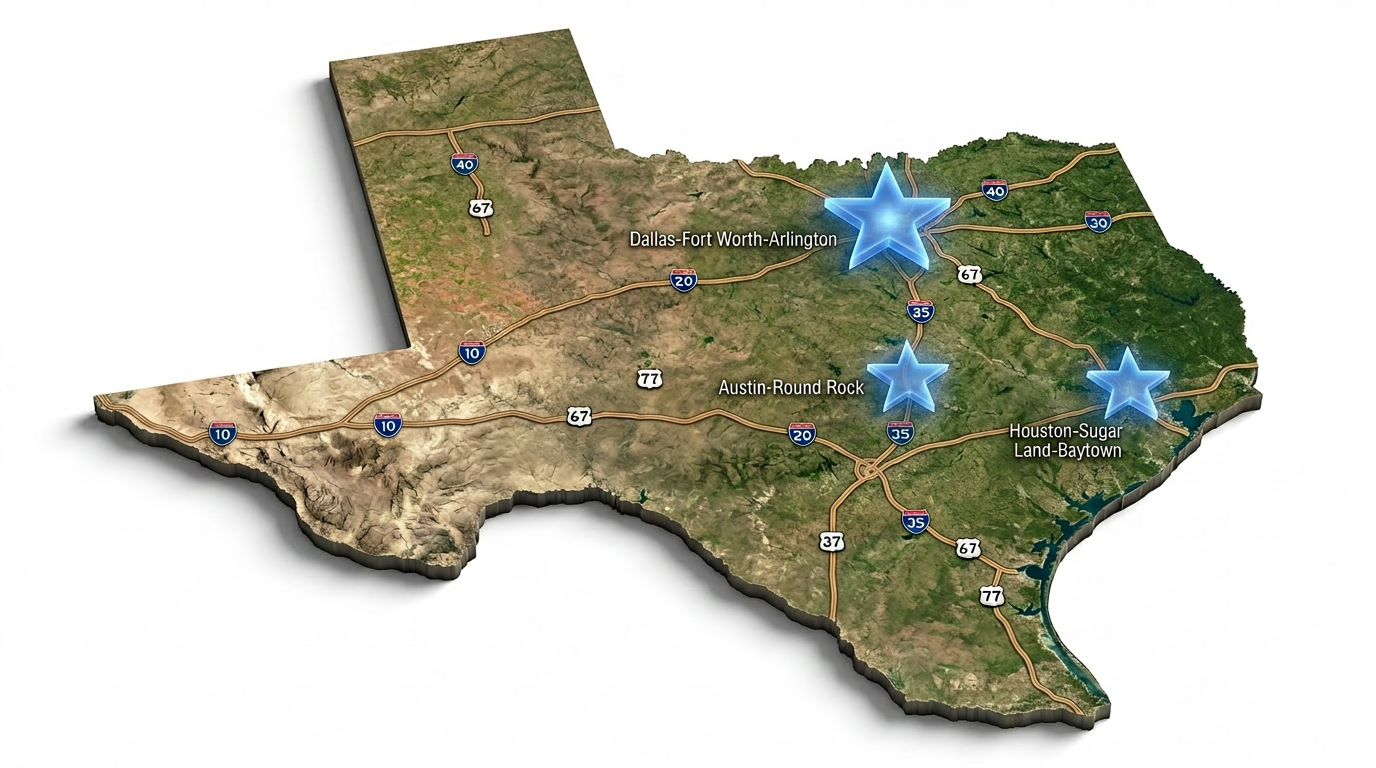
Serving clients statewide with practical, results-oriented representation in Dallas, Houston, Austin, and across Texas.






Have an idea for a blog? Click and request a blog and we will let you know when we post it!