


Personal Jurisdiction in Texas Federal Courts: Long-Arm Statute, Zippo Test, Effects Test & Due Process Explained
Personal Jurisdiction in Texas Federal Courts
Texas federal courts can only exercise personal jurisdiction over out-of-state defendants in federal question cases if the Texas long-arm statute and constitutional due process are satisfied. Wilson Whitaker Rynell breaks down minimum contacts, the Zippo sliding-scale test for websites, the Calder effects test, and what businesses need to know.
“When a federal question case is based upon a federal statute that is silent as to service of process, Federal Rule of Civil Procedure 4(e) permits a federal court to exercise jurisdiction over only those defendants who are subject to the jurisdiction of courts of the state in which that court sits.” See Aviles v. Kunkle, 978 F.2d 201, 203-04 (5th Cir. 1992) (citation omitted).
In such circumstances, a district court may exercise personal jurisdiction over a nonresident defendant if (1) the long-arm statute of the forum state permits the exercise of personal jurisdiction over the defendant, and (2) the exercise of such jurisdiction by the forum state is consistent with due process. Ruston Gas Turbines, Inc. v. Donaldson Co., Inc. 9 F.3d 415, 418 (5th Cir. 1993). The Texas long-arm statute confers jurisdiction to the constitutional limits of due process. TEX. CIV. PRAC. & REM. CODE § 17.042 (Vernon 2000); Alpine View Co. v. Atlas Copco ABI, 205 F.3d 208, 214 (5th Cir. 2000). Consequently, the question of personal jurisdiction under Texas law collapses into a single due process inquiry. See Bullion v. Gillespie, 895 F.2d 213, 215-16 (5th Cir. 1990).
Personal Jurisdiction in Texas Federal Courts: Why It Matters for Businesses
Constitutional Due Process And Personal Jurisdiction
If your Texas-based company is suing or being sued by an out-of-state defendant in federal court on a federal claim (such as trademark infringement, copyright violation, or certain business torts), one of the first and most critical questions is whether the court can even hear the case against that defendant.
Personal jurisdiction determines whether a court has the power to require a nonresident to defend itself in Texas. Without it, the lawsuit may be dismissed—no matter how strong your claims are.
Exercising personal jurisdiction over a nonresident defendant is consistent with constitutional due process when (1) the defendant has purposefully availed himself of the benefits and protections of the forum state by establishing “minimum contacts” with the forum state, and (2) the exercise of jurisdiction over that defendant does not offend traditional notions of fair play and substantial justice. Central Freight Lines, Inc. v. APA Transport Corp., 322 F.3d 376, 380 (5th Cir. 2003). “Minimum contacts” may be established through contacts sufficient to assert specific jurisdiction. See Alpine, 205 F.3d at 215. It is often helpful, when websites or downloaded app are used, to confirm if Defendants are subject to specific jurisdiction under both the Zippo test concerning Internet websites and the “effects test.”
At Wilson Whitaker Rynell, our business litigation and intellectual property attorneys regularly navigate these complex jurisdictional issues in federal courts across Texas. Below, we explain the governing rules in clear, practical terms so business owners, executives, and in-house counsel can better understand their rights and risks.
Federal Question Cases and Service of Process Under FRCP 4(e)
When a federal statute is silent on how to serve process, Federal Rule of Civil Procedure 4(e) limits a federal court’s personal jurisdiction to defendants who would be subject to the jurisdiction of the state courts where the federal court sits. In the Fifth Circuit (which includes Texas), this means the analysis turns entirely on Texas law.
A Texas federal court may exercise personal jurisdiction over a nonresident only if:
- The Texas long-arm statute permits it, and
- The exercise of jurisdiction complies with constitutional due process.
The Texas Long-Arm Statute: As Broad as the Constitution Allows
Texas’s long-arm statute (Tex. Civ. Prac. & Rem. Code § 17.042) reaches as far as the U.S. Constitution permits. Because of this, the two-prong test collapses into a single due-process inquiry. Courts focus solely on whether the defendant has sufficient “minimum contacts” with Texas and whether jurisdiction would be fair and reasonable.
Constitutional Due Process: Minimum Contacts + Fair Play
Due process is satisfied when:
- The nonresident defendant has purposefully availed itself of the benefits and protections of Texas by establishing “minimum contacts” with the state, and
- The exercise of jurisdiction does not offend “traditional notions of fair play and substantial justice.
Minimum contacts can support specific jurisdiction (when the lawsuit arises out of the defendant’s Texas-related activities) or, far more rarely after Daimler AG v. Bauman and Bristol-Myers Squibb, general jurisdiction (when the defendant is “essentially at home” in Texas). Most federal question cases turn on specific jurisdiction.
Active Vs. Passive Internet Websites To Establish Personal Jurisdiction
Modern business disputes increasingly involve websites, apps, or online platforms. Courts apply the Zippo sliding-scale test (from Zippo Mfg. Co. v. Zippo Dot Com, Inc.) to decide whether a defendant’s internet activity creates minimum contacts with Texas. Under the Zippo test, courts look to the “‘nature and quality of commercial activity that an entity conducts over the Internet.’” See id. (quoting Zippo Mfg. Co. v. Zippo Dot Com, Inc., 952 F. Supp. 1119, 1124 (W.D. Pa. 1997)). In doing so, courts categorize a defendant’s website along a spectrum, where interactive websites are placed at one end of the spectrum and passive websites are located at the opposite end. See id. Internet websites are classified as interactive “where a defendant clearly does business over the Internet by entering into contracts with residents of other states which ‘involve the knowing and repeated transmission of computer files over the Internet.’” See id. In such circumstances, “personal jurisdiction is proper.” See id.
- Interactive / Active Websites (high end of the scale): The defendant clearly does business over the internet—entering contracts, knowingly transmitting files, processing Texas orders, or targeting Texas customers. Personal jurisdiction is usually proper.
- Passive Websites (low end of the scale): The site merely posts information with no interaction. These rarely support jurisdiction.
- Middle ground: Sites that allow some user interaction (forms, email, limited e-commerce). Courts examine the level of commercial activity and the defendant’s intent to target Texas.
Wilson Whitaker Rynell frequently uses the Zippo framework in e-commerce, technology, and intellectual property cases to establish or challenge jurisdiction over out-of-state defendants whose online presence reaches Texas customers.
Additional Factors: Fair Play and Substantial Justice
Even with minimum contacts, courts weigh five factors to ensure jurisdiction is reasonable:
- The burden on the defendant
- Texas’s interest in adjudicating the dispute
- The plaintiff’s interest in convenient and effective relief
- The interstate judicial system’s interest in efficient resolution
- The shared interest of the states in furthering fundamental substantive social policies
These factors rarely defeat jurisdiction when minimum contacts are strong,
but they provide powerful arguments when contacts are borderline.
Effects Test To Establish Personal Jurisdiction
Defendants may also be subject to specific personal jurisdiction in Texas under the “effects test” first articulated by the Supreme Court in Calder v. Jones. Under this test, a nonresident defendant who commits intentional tortious acts outside Texas is subject to jurisdiction in Texas when the defendant expressly aimed those acts at Texas, knowing (or having reason to know) that the brunt of the resulting injury would be felt here. See Calder v. Jones, 465 U.S. 783, 788–89 (1984); Walden v. Fiore, 571 U.S. 277 (2014) (clarifying that the defendant’s conduct must connect meaningfully with the forum state itself).
Fifth Circuit precedent applies this test in a variety of business and IP disputes. See, e.g., Guidry v. U.S. Tobacco Co., 188 F.3d 619, 628 (5th Cir. 1999). Texas courts have held that when a defendant “expressly and intentionally aimed his conduct at Texas, with the effect of injuring a plaintiff with its principal place of business in this state, the defendant is subject to jurisdiction here.” Carrot Bunch Co. v. Computer Friends, Inc., 218 F. Supp. 2d 820, 826 (N.D. Tex. 2002) (Buchmeyer, J.).
Examples include online trademark or copyright infringement, targeted false advertising, or defamatory statements where the defendant knew the Texas-based plaintiff would suffer the primary harm in this state.
Practical Takeaways for Texas Businesses
- E-commerce and tech companies: Every sale shipped to Texas, every targeted ad, and every interactive feature can create jurisdiction.
- IP owners: Out-of-state infringers who know your brand or product is Texas-based are often subject to suit here under the effects test.
- Defendants: A well-timed motion to dismiss for lack of personal jurisdiction can end the case early and shift it to a more favorable forum.
Recent Texas Supreme Court decisions continue to emphasize that mere foreseeability (e.g., a product might end up in Texas) is not enough—purposeful targeting of the Texas market is required.
FAQ: Personal Jurisdiction in Texas Federal Courts
What is the difference between general and specific personal jurisdiction?
General jurisdiction allows a court to hear any claim against a defendant because the defendant is “at home” in the forum (usually incorporation or principal place of business). Specific jurisdiction is limited to claims that arise out of the defendant’s contacts with the forum state. Most federal question cases rely on specific jurisdiction.
Does posting a website automatically subject me to Texas jurisdiction?
No. Only interactive websites that do business with Texans or are purposefully directed at Texas typically create jurisdiction under the Zippo test. A passive informational site almost never does.
Can I sue an out-of-state company in Texas for online trademark infringement?
Often yes—if the defendant knew your business was in Texas and intentionally directed its infringing activities here, the Calder effects test will likely support jurisdiction.
How does the Texas long-arm statute compare to other states?
Texas’s statute is among the broadest because it extends to the constitutional limit. This makes Texas federal courts a favorable forum for plaintiffs when minimum contacts exist.
What should I do if I’m served with a Texas federal lawsuit as an out-of-state defendant?
Immediately consult experienced counsel. A motion to dismiss for lack of personal jurisdiction must be filed early or it is waived. Wilson Whitaker Rynell can evaluate your contacts with Texas and develop a strong jurisdictional defense.
Does this analysis apply only to federal question cases?
The principles discussed apply whenever a federal statute is silent on service. In diversity cases, the same Texas long-arm and due-process rules generally govern.
Why Choose Wilson Whitaker Rynell for
Your Federal Litigation Needs?
At Wilson Whitaker Rynell, our attorneys have extensive experience handling complex personal jurisdiction disputes, federal question cases, and intellectual property litigation in Texas federal courts. Whether you need to enforce your rights against an out-of-state defendant, defend against a lawsuit in Texas, or evaluate whether your website, marketing, or business activities expose you to jurisdiction in the Lone Star State, we provide strategic, results-driven counsel.
If you’ve been sued in Texas federal court by a nonresident plaintiff, received a demand letter involving trademark, copyright, or business tort claims, or simply want to proactively assess and minimize your company’s jurisdictional risk, contact our team today for a confidential consultation.
Contact Us or Call 972-248-8080 for a Free Consultation!
email info@wilsonlegalgroup.com
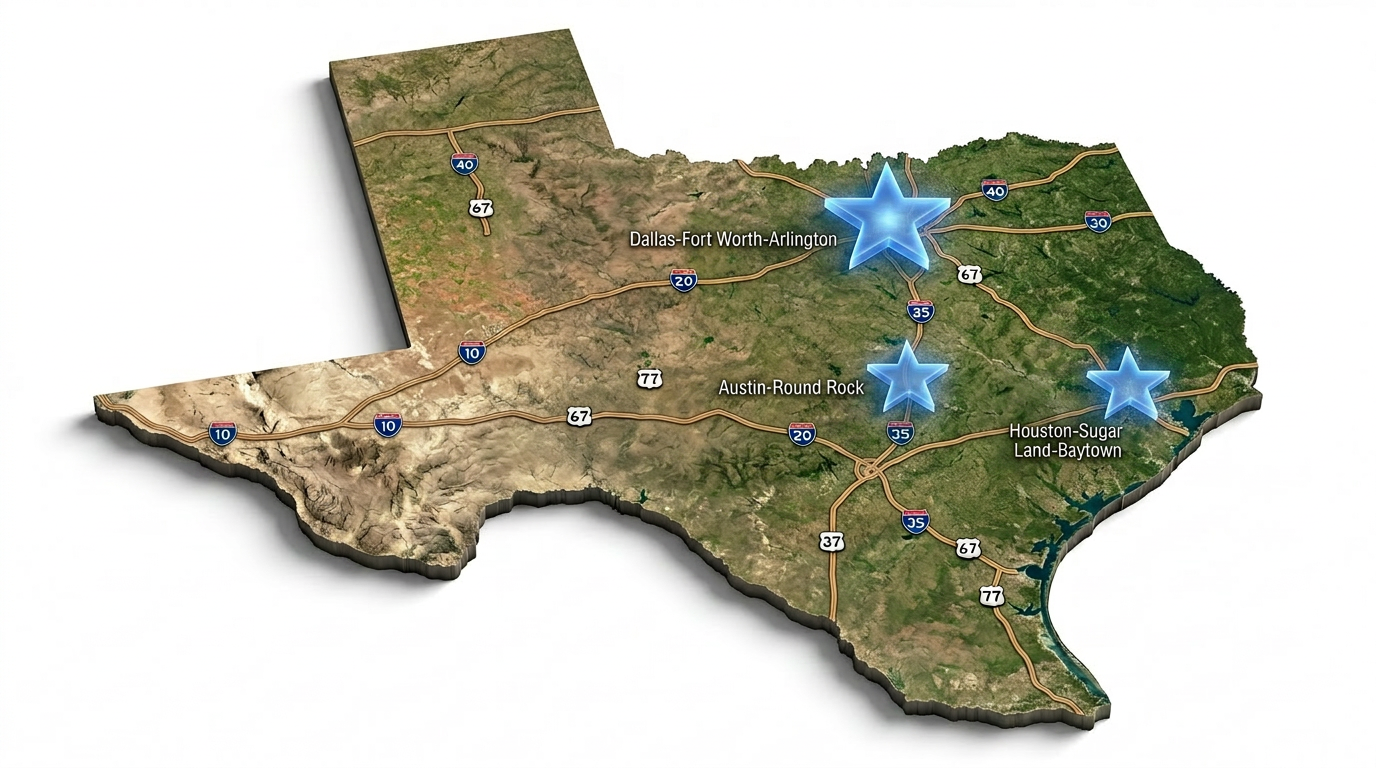
We serve clients across the DFW Metroplex, Houston, Austin, and statewide.
Dallas: 16610 Dallas Parkway, Suite 1000, Dallas, TX 75248 • 972-248-8080
Houston: 1201 Fannin Street, Suite 262, Houston, TX 77002 • 713-830-2207
Austin: 111 Congress Ave., Suite 500, Austin, TX 78704 • 512-691-4100








Have an idea for a blog? Click and request a blog and we will let you know when we post it!